Latitude.sh vs Cherry Servers: Hosting Compared (2026) Bare Metal

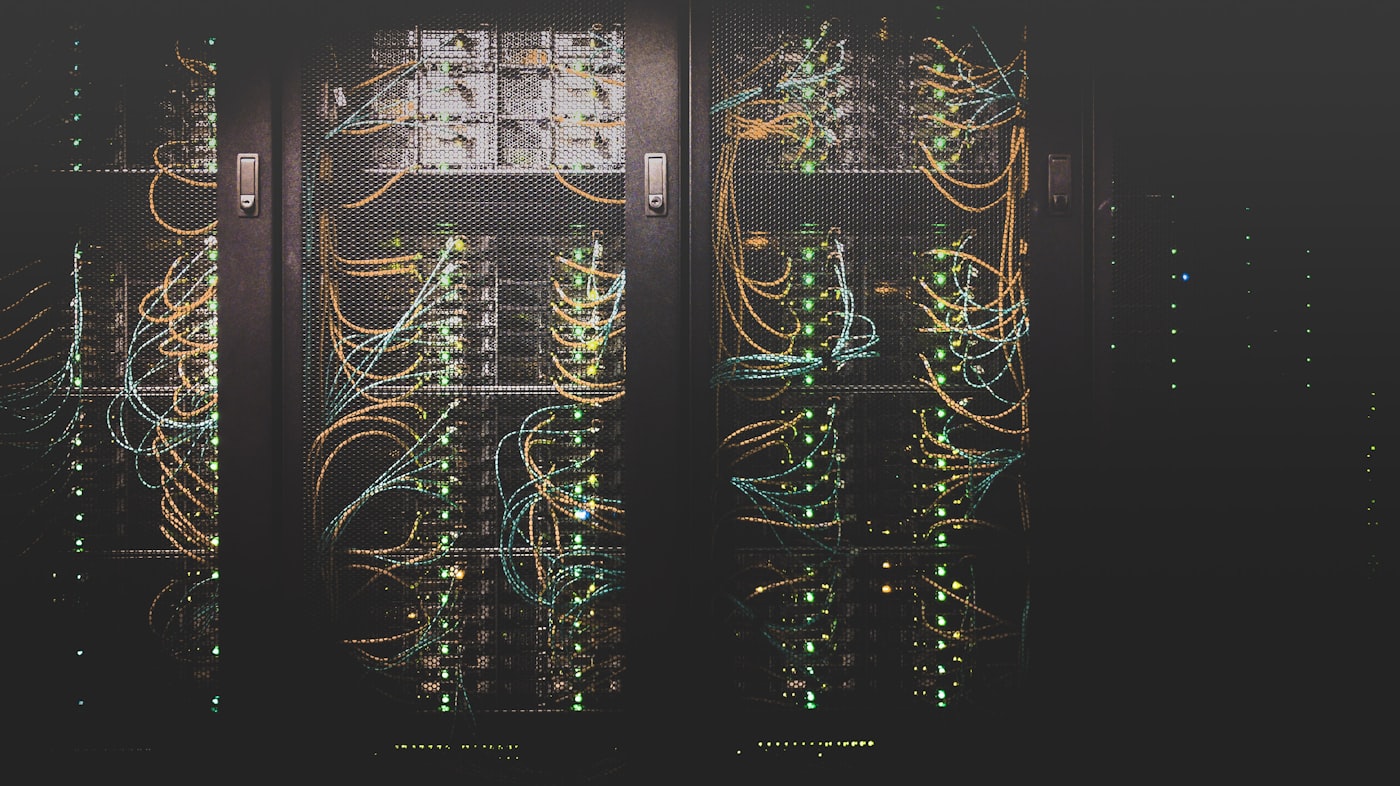
Why Bare Metal Still Wins for Performance-Critical Workloads
Virtual machines are convenient. They're fast to spin up, easy to resize, and they slot nicely into cloud-native architectures. But for workloads where CPU contention, unpredictable I/O latency, or shared memory bandwidth would kill performance, a virtualization layer is a liability — not a feature.
Bare metal dedicated servers solve this by giving you the entire physical machine. No hypervisor. No noisy-neighbor effects. Every CPU cycle, every GB of RAM, and every NVMe IOPS is yours.
Two providers that consistently come up in serious bare metal conversations are Latitude.sh and Cherry Servers. Both run AMD EPYC hardware, include substantial free bandwidth, and target developers rather than enterprise procurement teams. But they have real differences in pricing structure, geographic coverage, API maturity, and target workload — and picking the wrong one for your use case will cost you either money or capability.
The Short Answer
Before the full breakdown: if automation-first infrastructure is your priority — Terraform, CI/CD pipelines, programmatic provisioning at scale — Latitude.sh is the stronger choice. If you want the most hardware per dollar and flexible monthly billing across a wide CPU catalog, Cherry Servers wins.
For most developers deploying a single high-performance node, Cherry Servers' pricing is notably cheaper at the same hardware tier. For infrastructure teams running fleets of machines with API-driven lifecycle management, Latitude.sh's tooling ecosystem pulls ahead.
Pricing Comparison: What You Actually Pay
Pricing is where these two providers diverge most sharply. Latitude.sh bills in a compute-cloud model — hourly on-demand rates with reserved pricing discounts. Cherry Servers uses a monthly base rate with hourly billing also available.
Latitude.sh Bare Metal Pricing (June 2026)
Latitude.sh Gen 4 hardware runs on AMD EPYC processors with DDR5 RAM and ultra-fast NVMe. All plans include 20 TB free outbound bandwidth and unlimited inbound. Reserved instances offer up to 65% off hourly rates.
| Plan | CPU | RAM | Storage | Network | On-Demand | Monthly* |
|---|---|---|---|---|---|---|
| m4.metal.small | AMD 4244P — 6c @ 3.8 GHz | 64 GB DDR5 | 2× 960 GB NVMe | 2× 10 Gbps | $0.41/hr | $296/mo |
| f4.metal.small | AMD 4484PX — 12c @ 4.4 GHz | 96 GB DDR5 | 2× 960 GB NVMe | 2× 10 Gbps | $0.55/hr | $398/mo |
| m4.metal.medium | AMD 9124 SEV — 16c @ 3 GHz | 128 GB DDR5 | 2× 480 GB + 2× 1.9 TB NVMe | 2× 10 Gbps | $0.62/hr | $456/mo |
| f4.metal.medium | AMD 4564P — 16c @ 4.5 GHz | 128 GB DDR5 | 2× 480 GB + 2× 1.9 TB NVMe | 2× 10 Gbps | $0.76/hr | $555/mo |
| m4.metal.large | AMD 9254 SEV — 24c @ 2.9 GHz | 384 GB DDR5 | 2× 480 GB + 2× 3.8 TB NVMe | 2× 10 Gbps | $2.03/hr | $1,482/mo |
| rs4.metal.large | AMD 9354P SEV — 32c @ 3.25 GHz | 768 GB DDR5 | 2× 480 GB + 2× 8 TB NVMe | 2× 100 Gbps | $3.22/hr | $2,351/mo |
| rs4.metal.xlarge | AMD 9554P SEV — 64c @ 3.1 GHz | 1,536 GB DDR5 | 2× 480 GB + 4× 8 TB NVMe | 2× 100 Gbps | $5.44/hr | $3,971/mo |
*Monthly rate = on-demand pricing. Reserved instances (monthly commitment) are ~50% cheaper; yearly commitment ~65% cheaper. All plans include 20 TB free outbound bandwidth. Prices current as of June 2026.
Cherry Servers Bare Metal Pricing (June 2026)
Cherry Servers uses a monthly base rate model with hourly billing also available (starting at ~$0.298/hr). All plans include 100 TB free monthly outbound traffic — five times Latitude's free tier — which is a significant cost advantage for bandwidth-heavy workloads like game servers, streaming, or high-traffic APIs.
| CPU | Cores / Threads | Clock Speed | RAM | Storage | Monthly |
|---|---|---|---|---|---|
| Intel Gold 5315Y | 8c / 16t | 3.2 – 3.6 GHz | 32 GB (up to 512 GB) | 2× 250 GB NVMe | $174/mo |
| AMD Ryzen 7700X | 8c / 16t | 4.5 – 5.4 GHz | 64 GB (up to 128 GB) | 2× 1 TB NVMe | $186/mo |
| AMD EPYC 7313P | 16c / 32t | 3.0 – 3.7 GHz | 64 GB (up to 512 GB) | 2× 250 GB NVMe | $186/mo |
| AMD EPYC 7443P | 24c / 48t | 2.85 – 4.0 GHz | 64 GB (up to 1,024 GB) | 2× 250 GB NVMe | $198/mo |
| AMD Ryzen 9950X | 16c / 32t | 4.3 – 5.7 GHz | 192 GB | 2× 1 TB NVMe | $303/mo |
| AMD EPYC 9354P | 32c / 64t | 3.25 – 3.8 GHz | 192 GB (up to 1,152 GB) | 2× 1 TB NVMe | $490/mo |
| AMD EPYC 9554P | 64c / 128t | 3.1 – 3.75 GHz | 384 GB (up to 1,152 GB) | 2× 1 TB NVMe | $783/mo |
| AMD EPYC 9654 | 96c / 192t | 2.4 – 3.7 GHz | 768 GB (up to 1,152 GB) | 2× 4 TB NVMe | $1,169/mo |
| AMD EPYC 9754 | 128c / 256t | 2.25 – 3.1 GHz | 768 GB (up to 1,152 GB) | 2× 4 TB NVMe | $1,286/mo |
All Cherry Servers plans include 100 TB free monthly egress. Extra traffic from $0.50/TB. Hourly billing available. Fixed-term pricing saves up to 31%. Prices current as of June 2026.
💰 Bandwidth Cost Difference
Cherry Servers includes 100 TB/mo free egress on all dedicated plans vs. Latitude.sh's 20 TB/mo. At Latitude's $0.01/GB overage rate, that extra 80 TB would cost $819/mo extra. For bandwidth-heavy workloads — game servers, CDN origin, video streaming, large file delivery — Cherry's free tier alone can offset months of server costs.
Hardware Deep Dive
Latitude.sh: Focused SKU Catalog, High-Frequency Options
Latitude runs a tighter hardware catalog than Cherry Servers. Their Gen 4 lineup is exclusively AMD EPYC — which is the right call for server workloads — and they offer a high-frequency "f-series" that's worth knowing about:
- f4.metal.small — AMD EPYC 4484PX, 12 cores at 4.4 GHz. Excellent single-core performance for latency-sensitive apps.
- f4.metal.medium — AMD EPYC 4564P, 16 cores at 4.5 GHz. Strong for real-time systems, trading engines, low-latency APIs.
- f4.metal.large — AMD EPYC 9275F, 24 cores at 4.1 GHz, 768 GB RAM, 2× 100 Gbps. Top-tier single-socket performance.
The high-core-count AMD 9554P (64c, 1.5 TB RAM, dual 100 Gbps) targets memory-intensive analytics, large in-memory databases, and multi-tenant virtualization hosts. The inclusion of AMD SEV (Secure Encrypted Virtualization) on most SKUs is also meaningful for confidential compute workloads.
Cherry Servers: Widest CPU Catalog in the Segment
Cherry's hardware catalog is significantly broader. You can choose from:
- AMD Ryzen (consumer-grade desktop) — Ryzen 7700X, 9700X, 9900X, 9950X. High single-core clock speeds (up to 5.7 GHz) at lower prices. Best for single-threaded or lightly threaded workloads.
- AMD EPYC (server-grade) — Full Gen 2, 3, and 4 EPYC lineup including the 9654 (96 cores) and 9754 (128 cores). ECC memory support, server-class reliability.
- AMD Threadripper Pro — 7965WX (24c @ 4.2–5.3 GHz, 512 GB RAM) and 7975WX (32c @ 4.0–5.3 GHz, 768 GB RAM). Unusual combination of high single-core speed and large RAM capacity.
- Intel Xeon Gold — Legacy options still available for Windows Server compatibility or specific software licensing requirements.
- Dual-socket configs — 2× AMD EPYC 7402 (48c total), 2× EPYC 7443 (48c total), 2× EPYC 7543 (64c total), 2× Intel Gold 6330 (56c total) — for maximum core density per machine.
Cherry's Ryzen options are a notable differentiator. For workloads that benefit from raw clock speed over core count — game servers, some database configurations, high-frequency trading environments — a Ryzen 9950X at $303/mo with 192 GB RAM and 100 TB bandwidth is hard to match at that price point.
Geographic Coverage
Latitude.sh Locations
Latitude operates in 13+ locations across North America, South America, Europe, and Asia-Pacific. Notable locations include São Paulo, Santiago, Bogotá (strong Latin America coverage), Dallas, Silicon Valley, New York, Chicago, São Paulo, Amsterdam, Frankfurt, and Seoul.
Their Latin America presence is a genuine differentiator — most bare metal providers focus exclusively on North America and Europe. If your users or workloads are concentrated in LATAM, Latitude is currently one of the only bare metal providers worth evaluating.
Cherry Servers Locations
Cherry operates in 7 locations: Lithuania (Šiauliai), Netherlands (Amsterdam, Equinix AM4), Germany (Frankfurt, Equinix FR13), Sweden (Stockholm, Equinix SK3), United States (Chicago, CoreSite CH2), Singapore (Equinix), and Japan (Tokyo, Equinix TY15).
The Equinix colocation in Amsterdam, Frankfurt, and Singapore is meaningful for enterprise customers that need cross-connects or direct peering into financial networks and major internet exchanges (DE-CIX in Frankfurt, AMS-IX and ERA-IX in Amsterdam). Cherry does not cover LATAM or Middle East/Africa.
| Region | Latitude.sh | Cherry Servers |
|---|---|---|
| North America | ✅ Dallas, NY, Chicago, Silicon Valley | ✅ Chicago (CoreSite CH2) |
| Latin America | ✅ São Paulo, Santiago, Bogotá | ❌ Not covered |
| Europe | ✅ Amsterdam, Frankfurt, London | ✅ Amsterdam, Frankfurt, Stockholm, Lithuania |
| Asia-Pacific | ✅ Tokyo, Seoul, Singapore | ✅ Singapore, Tokyo (Equinix) |
| Equinix colocation | ✅ Select sites | ✅ AM4, FR13, SK3, TY15 |
API, Automation & Developer Experience
Latitude.sh: Infrastructure as Code First
Latitude.sh was built API-first. The platform ships with:
- A full REST API with comprehensive documentation
- An official Terraform provider (published on the Terraform Registry)
- Official SDKs for multiple languages
- A CLI tool
- GitHub-published examples repository
- Native Kubernetes support (Latitude Kubernetes Service)
- Managed Postgres as an add-on service
If your team runs GitOps workflows, uses Terraform for all infrastructure, or needs programmatic server lifecycle management (provision → configure → deprovision on a schedule), Latitude's tooling ecosystem is meaningfully more complete than Cherry's. The reserved instance pricing model also fits predictable workloads better — you commit to a term and get a significant rate reduction, similar to how AWS and GCP reserved capacity pricing works.
Cherry Servers: API Available, Less Ecosystem Depth
Cherry Servers does provide an API (documented at api.cherryservers.com), CLI access, and DevOps integrations. The control panel is well-reviewed for ease of use, and the 12-minute average deployment time is among the fastest in the dedicated segment. However, the tooling ecosystem — third-party integrations, Terraform providers, SDK depth — is less mature than Latitude's.
For operators who prefer a dashboard-driven workflow or occasional programmatic management rather than full infrastructure-as-code pipelines, this gap is irrelevant. For DevOps teams that want to treat bare metal the same way they treat cloud instances, it matters.
Deployment Speed
Cherry Servers advertises a 12-minute average deployment for pre-built (Instant Server) configurations — and customer reviews generally confirm this. Custom server configurations deploy in 24–72 hours depending on hardware availability.
Latitude.sh's deployment speed varies by location and hardware tier but is generally in the same ballpark for standard SKUs. Their reserved instance model means hardware is pre-allocated, reducing provisioning latency for production deployments.
Support & SLA
| Category | Latitude.sh | Cherry Servers |
|---|---|---|
| Uptime SLA | SOC 2 Type 2 attested | 99.97% SLA |
| Support channels | Ticket, docs, dashboard | Email, live chat, phone, 24/7 |
| Support hours | Business + on-call | 24/7 technical support |
| Compliance | SOC 2 Type 2 | SOC 2 Type II, ISO 27001/22301, PCI DSS (select sites) |
| DDoS protection | Available | Available as add-on |
| Backup storage | Not listed | Up to 2 TB included |
| Payment methods | Credit card, wire | Credit card, PayPal, crypto, Apple/Google Pay, 20+ options |
Cherry's 24/7 phone and live chat support is a meaningful operational advantage for teams without dedicated SRE staff. Latitude's SOC 2 Type 2 attestation is important for regulated industries, fintech, and enterprise contracts that require audit documentation.
Use Case Recommendations
High-Traffic Web Applications & APIs
For a web application or API server that needs dedicated CPU resources and handles significant bandwidth, Cherry Servers wins on cost. An AMD EPYC 7443P (24 cores, 64 GB RAM, 100 TB bandwidth) at ~$198/mo is difficult to beat for a primary application server. The 100 TB free egress alone makes it substantially cheaper for high-traffic scenarios than Latitude's 20 TB included tier.
Game Servers
Game servers care about single-core clock speed and bandwidth. Cherry's Ryzen options (7700X, 9900X, 9950X at 4.4–5.7 GHz max boost) are the strongest value in this category. 100 TB free monthly egress means a busy game server generates no surprise bandwidth bills. Cherry also has a dedicated game server product page, signaling genuine focus on this market.
AI/ML Training & Inference
Both providers offer GPU options. Latitude.sh has an H100 80GB config at $1.68/hr and an 8× RTX PRO 6000 cluster at $23.99/hr. Cherry Servers offers optional GPU add-ons on select EPYC configs and dedicated GPU server plans. For training jobs requiring high-memory EPYC machines as CPU hosts alongside GPU accelerators, Cherry's high-RAM EPYC 9654 (96c, 768 GB RAM, $1,169/mo) or EPYC 9754 (128c, 768 GB RAM, $1,286/mo) are competitive. Latitude's H100 plan is simpler to provision for pure GPU inference workloads.
Databases & In-Memory Workloads
Both providers support very high-RAM configurations. Cherry's EPYC 9554P goes to 1,152 GB RAM; the dual-socket EPYC configs support up to 1,024 GB RAM. Latitude's rs4.metal.xlarge tops out at 1,536 GB DDR5. For large PostgreSQL, Redis, or in-memory analytics deployments, Latitude's DDR5 at the top tier is the highest capacity option — but Cherry's pricing at comparable specs is significantly lower.
DevOps Teams Running Infrastructure at Scale
If your team manages infrastructure programmatically — Terraform, Pulumi, Ansible, CI/CD-triggered provisioning — Latitude.sh's API and tooling ecosystem is the better fit. The Terraform provider, multi-language SDKs, and reserved instance billing model map cleanly to how modern infrastructure teams operate.
Latin America Deployments
Cherry Servers has no presence in LATAM. If you need bare metal in Brazil, Colombia, Chile, or Argentina, Latitude.sh is currently the only provider in this comparison with coverage there.
The Verdict
Choose Latitude.sh If…
- ✓ You manage infrastructure with Terraform or CI/CD pipelines
- ✓ You need Latin America coverage
- ✓ API-first bare metal provisioning is a hard requirement
- ✓ You want reserved pricing with long-term cost predictability
- ✓ High-frequency EPYC (f-series) or SEV confidential compute matters
- ✓ You need SOC 2 Type 2 documentation for compliance contracts
Choose Cherry Servers If…
- ✓ You want the best hardware-per-dollar ratio
- ✓ You need 100 TB free monthly egress bandwidth
- ✓ You want high-clock Ryzen CPUs for game servers or latency-sensitive apps
- ✓ Dual-socket or Threadripper Pro configs match your workload
- ✓ 24/7 live chat and phone support matters to your team
- ✓ You need crypto payment options or want Equinix colocation in Europe/Asia
For most teams deploying their first or second dedicated server, Cherry Servers delivers more compute for the money, more bandwidth, and a broader hardware catalog. For infrastructure teams running fleets of machines with programmatic lifecycle management, Latitude.sh's tooling and geographic reach justify the premium.
Neither platform is a bad choice. Both are meaningfully better than running performance-critical workloads on shared cloud VMs — which remain the right answer only when elasticity matters more than raw, predictable performance.
Frequently Asked Questions
Is bare metal faster than a VPS?
For CPU-bound and I/O-bound workloads, yes — consistently. A bare metal server eliminates the virtualization layer, meaning you get full access to the CPU clock speed, L3 cache, and NVMe IOPS without competing with other tenants. The practical difference depends on your workload: a simple Node.js app may see negligible difference; a database under heavy write load or a real-time processing engine will see significant gains.
How does Cherry Servers' deployment time compare to Latitude.sh?
Cherry Servers advertises a 12-minute average for Instant Server (pre-built) configurations. Custom server configurations take 24–72 hours. Latitude.sh's standard SKUs provision in a similar time window for on-demand instances; reserved instances may be faster since hardware is pre-allocated.
Does Cherry Servers support crypto payments?
Yes. Cherry Servers supports Bitcoin, Ethereum, USDC, and other cryptocurrencies in addition to 20+ traditional payment methods including credit cards, PayPal, bank transfers, Apple Pay, and Google Pay. Latitude.sh accepts credit cards and wire transfers but does not currently list crypto as a payment option.
Can I use Latitude.sh with Terraform?
Yes. Latitude.sh has an official provider published on the Terraform Registry, enabling full infrastructure-as-code management of bare metal servers. Cherry Servers also offers API and CLI access but does not currently have a published official Terraform provider with the same ecosystem depth.
Which provider is better for European deployments?
Cherry Servers has a stronger European footprint with Equinix colocation in Amsterdam (AM4), Frankfurt (FR13), and Stockholm (SK3), plus their own data center in Lithuania. For sub-15ms latency across Western Europe and compliance-sensitive workloads requiring ISO 27001, SOC 2, or PCI DSS, Cherry's European presence is well-suited. Latitude.sh covers Amsterdam and Frankfurt but does not include the Scandinavian/Baltic markets.
Heads up: Pricing and hardware availability change frequently. Always verify current rates directly at latitude.sh/pricing and cherryservers.com/pricing/dedicated-servers before making a purchasing decision. Prices in this article reflect public rates as of June 2026.
Chief Writer · Texas Web Service